
Do we still need to worry about the water levels in Lake Mead?
The short answer:
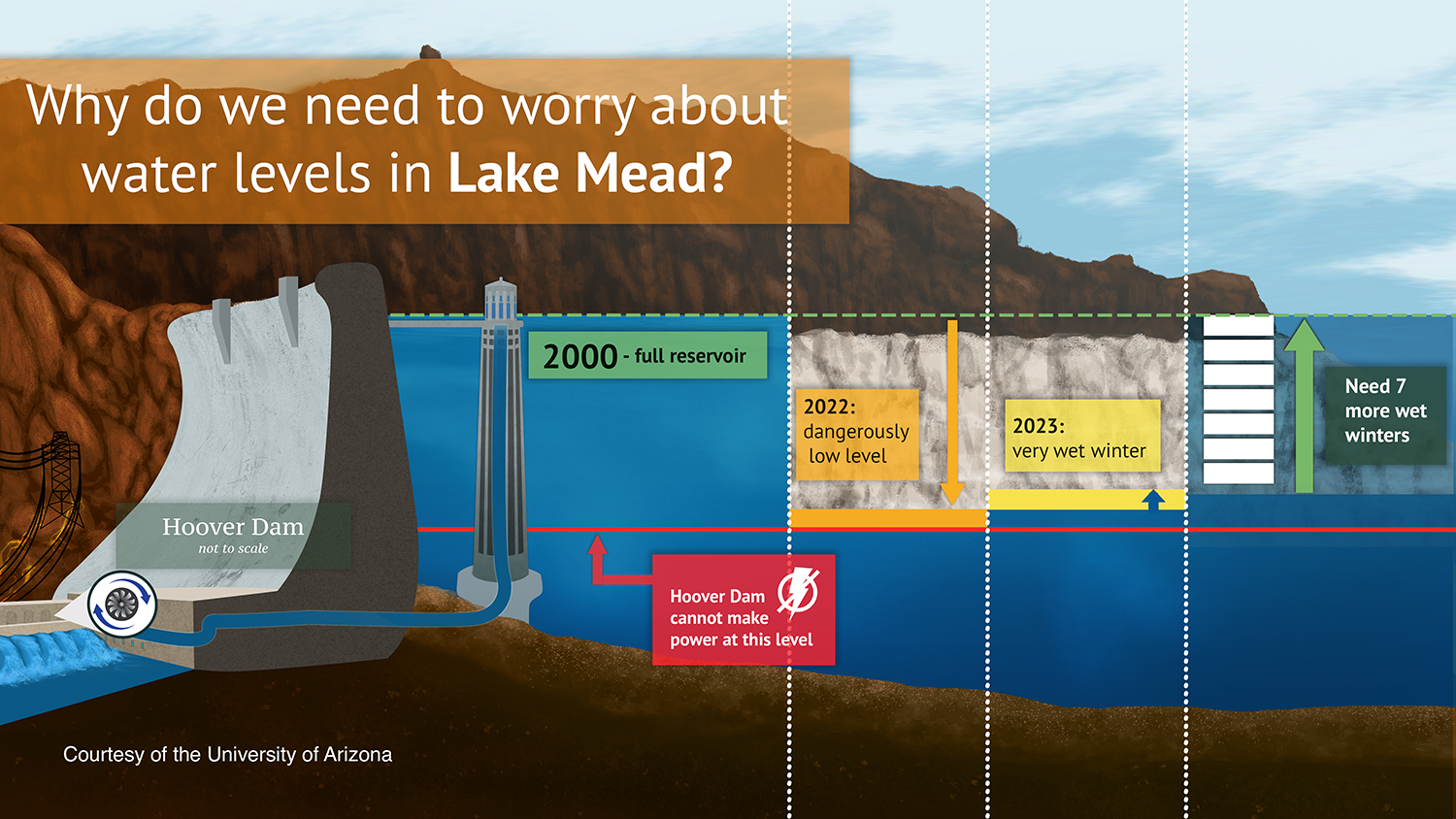
Millions of people in the Southwest rely on Lake Mead for water and electricity generation through the Hoover Dam. Although the water levels in Lake Mead have been increasing thanks to a few above normal wet winters, there is still a reason to be concerned about the lake. For example, water levels increased almost 20 feet in 2023. But, Lake Mead was still more than 150 feet short of full due to a prolonged drought that dropped lake levels for 20 years before that. It would take approximately seven more back-to-back wet winters (similar to 2023) to get the lake to where it was before the current drought began. And one or two dry winters could easily result in dangerously low levels again.
Unfortunately, a prolonged wet period is unlikely because scientists think the current drought is caused more by warmer temperatures than by a lack of snow and rain. When temperatures are higher, plants use more water, and less makes it to streams and rivers. Scientists expect temperatures will continue to increase, leading to a long-term drying pattern that could continue well into the future. This makes it likely that there will be less water flowing into Lake Mead in the future than there was in the past. Given uncertain future water supplies, long-term conservation measures will be needed to keep the lake from reaching dangerous levels.
Media downloads:
| NAME | DESCRIPTION | SIZE | LENGTH |
|---|---|---|---|
| Lake Mead Worries Animation (zip) | Video with no voiceover or captions plus sample script | 61 MB | 43s |
Design team:
Student Developers:
Zoe Montano, Caitlin Brady, Jessi Moeschl, Sammie Oligmueller, Gaby Gastelum, Samantha Bartlett and Anika McKee
Translators:
Jaritza Gómez and Xenia De Gracia
Advisors:
Project Manager: Sara Kobilka
Science Advisor: Laura Condon
Graphic Designer:
Megan Roxbury
Infographic:
(click image to enlarge)
On Social Media:
Video Source:
References and Additional Resources:
To learn more about this question checkout these resources:
- Andrews, Hillary. “Lakes Mead and Powell Remain Historically Low Despite Improving Water Levels.” FOX Weather, Fox Weather, 17 Aug. 2023
- Skinner, Anna. “Lake Mead Water Levels Get Great News.” Newsweek, Newsweek, 16 Dec. 2023
- National Park Service. “Storage Capacity of Lake Mead“ U.S. Department of the Interior, 13 Dec. 2022
- White, Robyn. “How Lake Mead Water Levels Changed in a Year.” Newsweek, Newsweek, 27 Dec. 2023
- U.S. Bureau of Reclamation. (n.d.). Lake Mead High/Low Elevations. (PDF)
¿Todavía tenemos que preocuparnos por los niveles de agua en el lago Mead?
La respuesta corta:
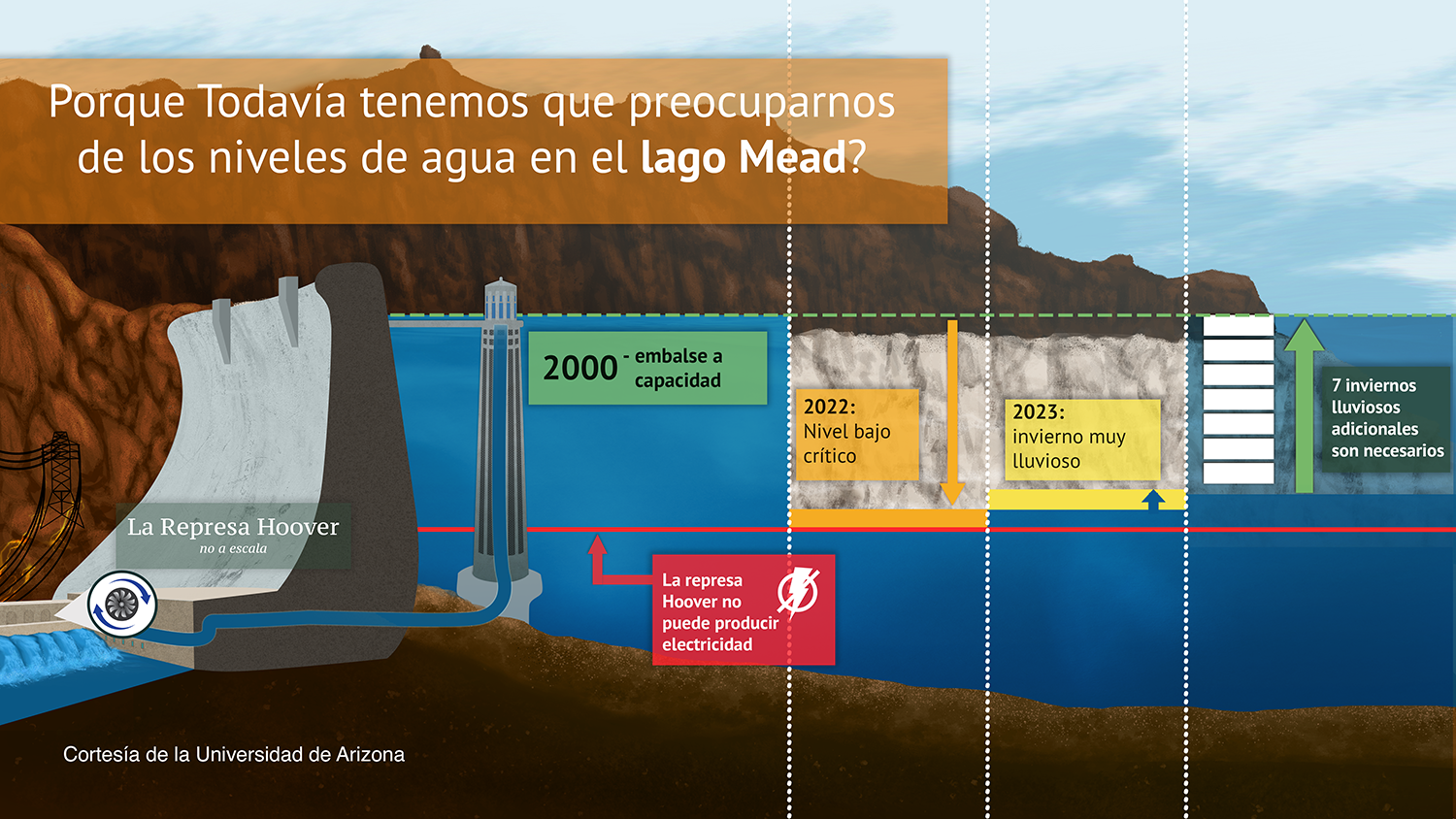
Millones de personas en el suroeste dependen de acueductos del lago Mead y la generación de electricidad de la represa Hoover. Aunque los niveles de agua del lago han incrementado debido a inviernos más lluviosos de lo habitual, siguen existiendo motivos para estar preocupados por el lago. Por ejemplo, los niveles de agua incrementaron casi 20 pies (aprox. 6 metros) en 2023, pero el lago continúa por más de 150 pies (aprox 46 metros) debajo de capacidad máxima a consecuencia de una sequía extendida la cual bajó los niveles del lago 20 años antes. Tomaría más de siete años consecutivos de inviernos lluviosos (similares al 2023) para que el lago llegue al nivel previo al comienzo de la sequía. Uno o dos inviernos secos podrían fácilmente resultar en niveles peligrosamente bajos.
Lamentablemente un periodo lluvioso extendido es poco probable, pues los científicos piensan que la sequía actual es causada por altas temperaturas, no por la falta de lluvia o nieve. Cuando las temperaturas son muy altas las plantas utilizan más agua y como consecuencia menos agua llega a ríos y arroyos. Los científicos esperan que las temperaturas continúen aumentando, resultando en un patrón de sequedad extendida el cual puede continuar a futuro. Dada la incertidumbre en los suministros de agua, métodos de conservación a largo plazo son necesarios para prevenir al lago de alcanzar niveles peligrosos.
Materiales disponibles para descarga:
| TÍTULO | DESCRIPCIÓN | TAMAÑO | DURACIÓN |
|---|---|---|---|
| Lake Mead Worries Animation Español (zip) | Video sin voz y sin subtítulos | 62 MB | 43s |
El equipo de Diseño:
Estudiante Desarrolladores:
Zoe Montano, Caitlin Brady, Jessi Moeschl, Sammie Oligmueller, Gaby Gastelum, Samantha Bartlett and Anika McKee
Traductas:
Jaritza Gómez and Xenia De Gracia
Consejeros:
La Manejada del Projecto: Sara Kobilka
Asesa Científica: Laura Condon
Diseñador Gráfico:
Megan Roxbury
Infografía:
(haga clic en la imagen para ampliar)
Referencias y recursos adicionales:
Para obtener más información sobre esta pregunta, consulta estos recursos:
- Andrews, Hillary. “Lakes Mead and Powell Remain Historically Low Despite Improving Water Levels.” FOX Weather, Fox Weather, 17 Aug. 2023
- Skinner, Anna. “Lake Mead Water Levels Get Great News.” Newsweek, Newsweek, 16 Dec. 2023
- National Park Service. “Storage Capacity of Lake Mead“ U.S. Department of the Interior, 13 Dec. 2022
- White, Robyn. “How Lake Mead Water Levels Changed in a Year.” Newsweek, Newsweek, 27 Dec. 2023
- U.S. Bureau of Reclamation. (n.d.). Lake Mead High/Low Elevations. (PDF)